Monsters in the Pews
- sarahstiltner
- Oct 27, 2025
- 5 min read

Updated: Mar 3
Halloween is almost here, and so we have spent the past month watching spooky movies and reading spooky novels. And most recently, my family has been rewatching Stranger Things in preparation for the new season next month. My fifteen-year-old daughter loves to be terrorized by Vecna and Demogorgons, hiding her face one moment and demanding answers the next. And it has been so fun.
The truth is, I wasn’t always a fan of stories like this. Growing up in a high-control religious group, movies and television weren’t technically forbidden, but they were so harshly criticized that most of us avoided them. Watching was treated as a mark of worldliness, something to be confessed. Horror, especially, carried a particular weight. The creatures and hauntings depicted were branded as demonic, and watching such things would give Satan an open door, straight into your home.
These days I find horror movies downright fun. I laugh at jump-scares, cheer at clever twists, and grin when the “monster” finally lumbers out of the shadows. Rarely do they scare me, rather, they tend to amuse. They’re entertaining precisely because I know they’re not real. Just projections on a screen, flickers of imagination we can wrestle with safely.
The figures that truly terrify me are the ones without costumes.
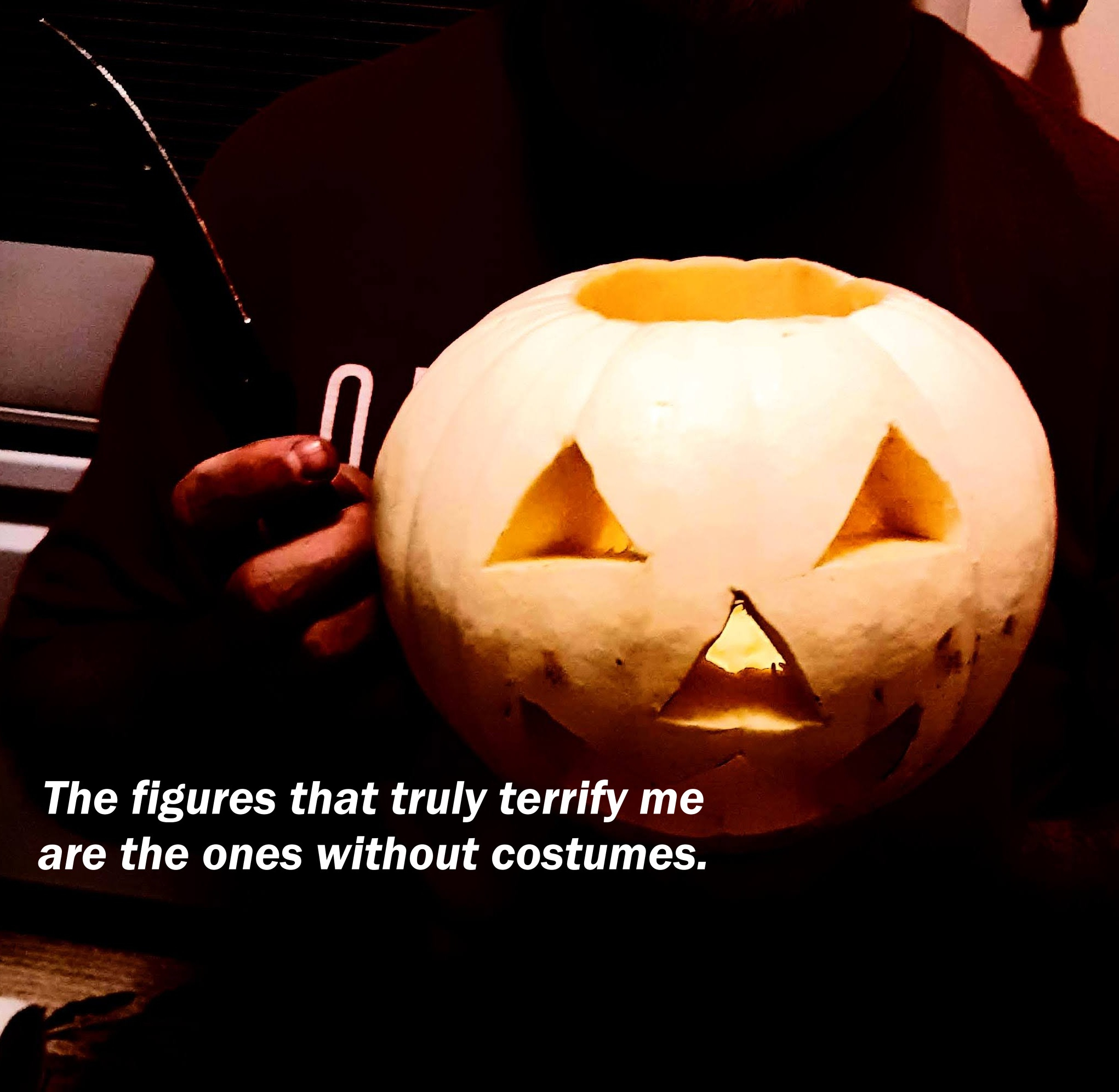
They don’t crawl out of the Upside Down and they are already in our homes. They stand in pulpits and wear white coats. They smile in family photos, shaking hands, offering prayers. They wear masks of “devoted husband” or “respected elder,” while their real faces remain hidden. Behind those disguises, they consume lives from the inside out.
And the statistics are chilling: domestic abuse occurs at the same rate within the church as outside it. One in three women. That means one-third of the women in your pews may be silently suffering. One-third of the women who pass the offering plate, cradle babies in the nursery, teach Sunday school, or sing beside you in worship. Behind the hymns and handshakes, something predatory is lurking.
Understanding abuse is never instant. It comes in fragments, like a room half-lit where shapes flicker at the edge of vision. At first, nothing makes sense. How could the very person who vowed to love and protect also be the one who wounds and destroys? What should have been a framework of partnership turns out to be a trapdoor into betrayal.
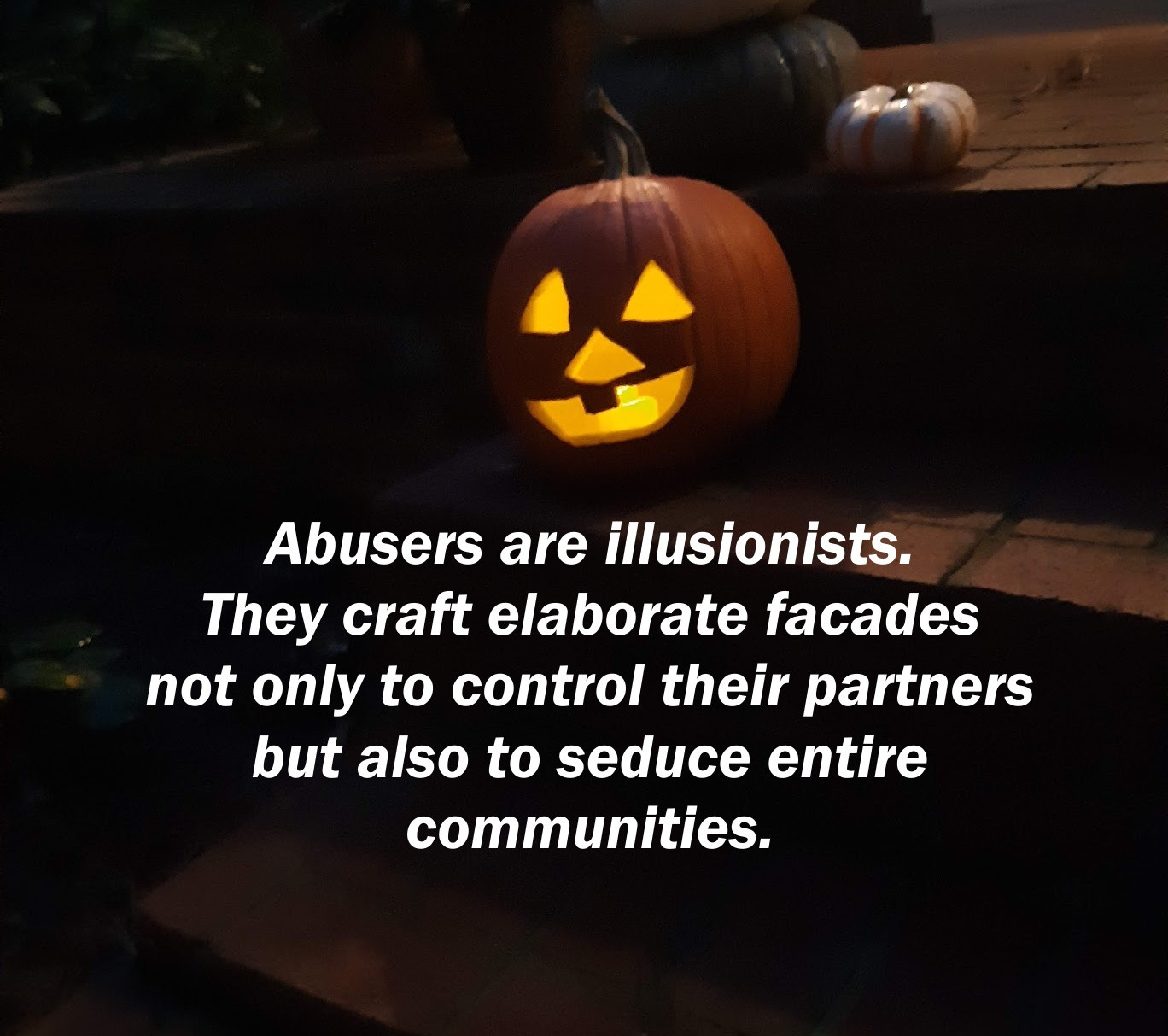
Abusers are illusionists. They craft elaborate facades not only to control their partners but also to seduce entire communities. They build sets so convincing that neighbors, friends, even family applaud the performance. And we, all of us, play along until hopefully the mask slips and the specter behind it is revealed.
The oldest trick of the haunted house is isolation.
He kept her visible enough to appear present, but never truly known. Always serving, always quiet, but never allowed to exist apart from him. Alone in a crowd that prided itself on discernment. A ghost in her own community.
And over time, I watched my sister grow smaller. Not in stature, but in spirit. Her dreams drained away, her laughter faded, her voice went dim. She slipped into a shadow of herself, like someone slowly vanishing from her own life.
But I could never let her go. I held fast, and in refusing to release her, I became a threat to him. He tried to sever our bond with suspicion and lies—that is how abusers work, cutting away every light, every tether, until their victim is left in darkness with no exit.
Our relationship bent beneath the strain, shaped more by silences than words. But love endured, defiant as a single candle in a haunted room, refusing to let the shadows have the last word. We remained in this fragile place for many years.
Then came the night of the phone call in December 2017. My mother’s voice trembled with terror. She and my sister and the children had barricaded themselves in a room, desperate to survive the night. She asked if they could come to me if it became necessary, then hung up. Silence followed for hours. I didn’t sleep. It was the first of many sleepless nights.
Later, when my sister finally spoke the truth, it was like puzzle pieces falling into a real-life thriller, the real Sleeping with the Enemy. Sixteen years of abuse—body, soul, and spirit—unveiled in a single night. My first reaction was relief, because suddenly all the shadows made sense. Then came guilt, sharp and cold, that I hadn’t been able to name the monster sooner.
On the first day of court, my sister wore a bright red blouse. It was unlike her in every way. And I think that was the point. It was armor, war paint, a fragile defense against the enormity of what she faced. She shook so hard she sat on her hands, her eyes kept returning to me for courage. I willed her to be strong, though I knew this was only the beginning of a long, grueling ordeal.
And then the elders of the church arrived. They were not there to defend her, not even to remain neutral. No, one by one they fell into line behind him. The sight was a grotesque tableau: men who claimed the name of shepherds, yet cast their lot with the wolf while the woman he had devoured for sixteen years sat forsaken by them.
That was the day I realized the terror was not just this one man. The deeper horror was the system that shielded him, excused him, and cloaked him. The darkness was not only in the abuser but in the congregation that chose to close their eyes.
This Friday we’ll carve pumpkins, pass out candy, and laugh at jump-scares. But the real horrors don’t wait for Halloween. They walk in daylight. They hold positions of power. They preach sermons and lead prayers.
And one in three women in your community knows them up close.
That is why I tell this story. Because silence is the cloak that keeps them hidden. Because naming what lurks in shadows is the first step to breaking their grip.
So yes, I can enjoy the Demogorgon and Demidogs with my daughter. Because I know where the true monsters dwell. They aren’t in the Upside Down, they are here.
And the bravest thing we can do is refuse to let them stay disguised.
If You Need Help
If you are living with abuse—or if someone you love is—know that you are not alone, and there is help. The National Domestic Violence Hotline is available 24/7 at 800-799-7233 or by text (“START” to 88788). You can also visit thehotline.org


Comments